
Procuring enterprise AI automation often means managing upfront capital expenditure, protracted procurement cycles and fragmented vendor arrangements for deployment and support. Many leading platforms either require custom project scoping with undisclosed pricing or demand extensive specialist skills just to reach production scale. This comparison details managed service models, ease of adoption and ongoing costs so you can assess which enterprise AI automation provider fits your organisational size and budget tolerance.
Table of Contents
GMD Automation
At a Glance
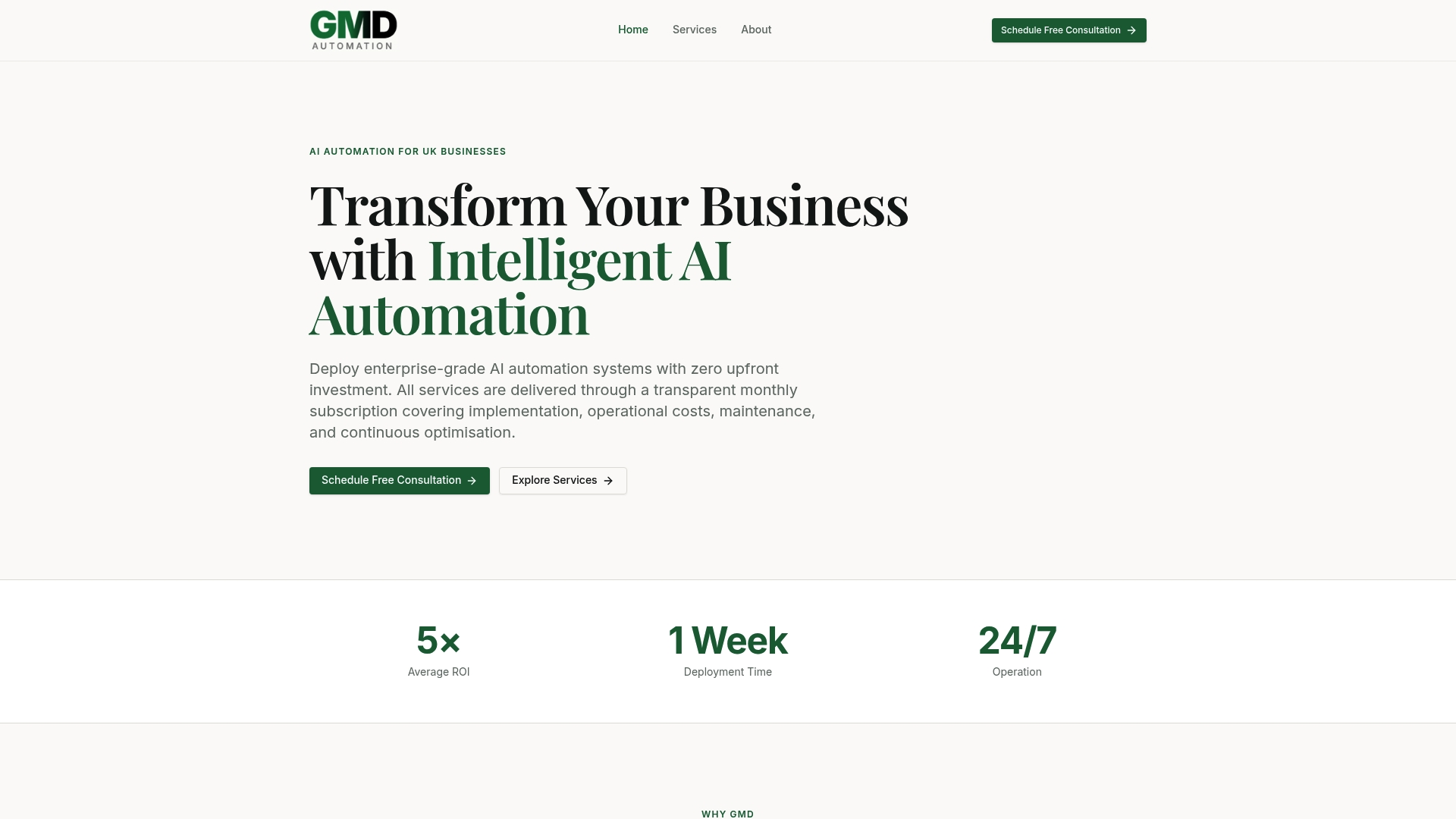
GMD Automation builds enterprise-grade AI systems with zero upfront investment, folding deployment, hosting, monitoring and optimisation into a single monthly charge. The offering is aimed squarely at UK organisations that want managed AI automation without capital expenditure or a lengthy procurement process.
Core Features
-
Zero upfront investment model where systems are built at no initial cost and run on a subscription covering implementation through ongoing support.
-
All-in-one monthly subscription that includes deployment, hosting, monitoring and continuous optimisation so you do not manage disparate invoices or vendors.
-
Production-ready systems designed for scale, security and compliance together with flexible scaling via rolling monthly contracts and three months notice for cancellation.
-
AI Chatbots for customer acquisition and support, AI Voice Agents for inbound and outbound calls, digital messaging automation across social channels and web operations with performance optimisation and secure hosting.
-
Educational material and a demo agent built on the deployment systems to test flows and build stakeholder confidence before full roll-out.
Key Differentiator
The single most tangible distinction is the financing model: GMD Automation builds enterprise-grade AI systems at no upfront cost and delivers them under a fully managed monthly subscription. That removes capital barriers and moves budget from capex to a predictable operating line while keeping the vendor responsible for run-time performance.
Pros
-
Lower entry barrier: No initial capital outlay reduces procurement friction and lets small teams start automation projects without board-level budget approvals.
-
Full service management reduces the need for in-house ML expertise; GMD handles deployment, hosting, monitoring and optimisation so your IT team is less involved.
-
The vendor advertises fast deployment and outcomes, citing an average deployment of one week and a measurable ROI around 5x. That claim is presented by the vendor and should be validated during discovery.
-
Flexible monthly scaling with three months notice keeps commitments light compared with multi-year licences and lets teams adjust capacity as demand changes.
-
The combination of chat, voice and messaging channels means a single supplier can handle multi-channel automation rather than piecing together point solutions.
Cons
- Subscription pricing is tailored to deployment scope which can make direct comparisons with competitors harder during procurement exercises.
Who It Suits
UK small and medium sized businesses that want to experiment with or expand AI automation without a capital programme and without hiring specialised engineers. It also fits organisations that prefer a managed service model and predictable monthly costs.
Unique Value Proposition
Deployments start with no capital spend and roll into a single predictable monthly fee that expressly covers implementation, hosting, monitoring and ongoing optimisation. For finance teams that prefer OpEx to CapEx this simplifies vendor management and budgeting while keeping delivery responsibility with the supplier.
Real World Use Case
A retail chain used GMD Automation’s chatbot to handle customer queries and book appointments overnight, reducing manual handling and increasing conversions outside trading hours. The same deployment later added cart recovery messages and voice callbacks for high value leads.
Pricing
Most services use tailored pricing based on deployment scope and typically sit on standard or pro subscription plans. Expect costs quoted after a scoping conversation rather than fixed per-seat rates, with the monthly subscription covering delivery and ongoing support.
Website: https://gmdautomation.ai
Ingenaium
At a Glance
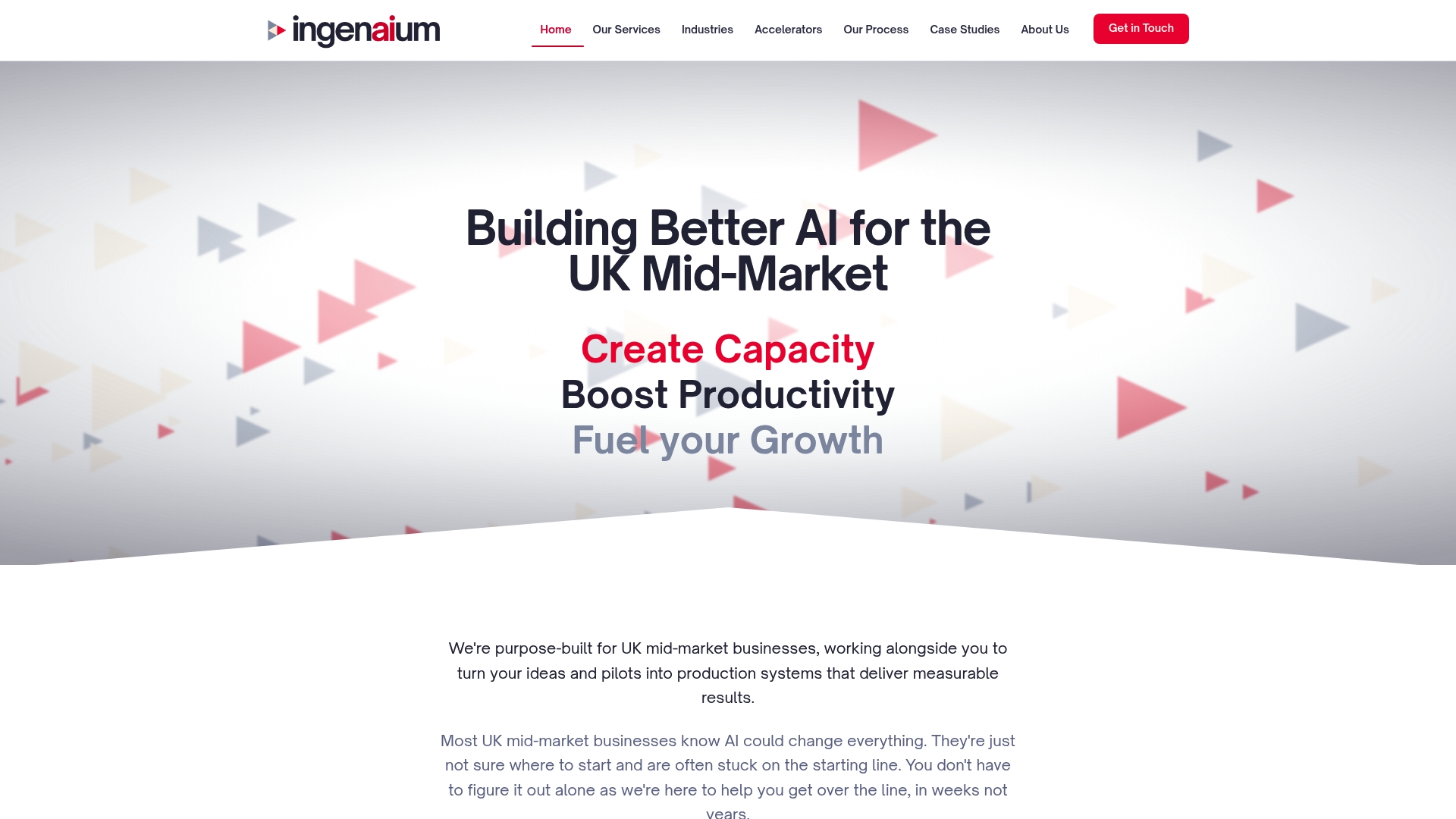
Ingenaium ships a suite of pre-built accelerators for competitor monitoring, document processing, contact mapping, CV vetting and financial modelling aimed at mid-market UK organisations. The vendor pairs those accelerators with an end-to-end delivery approach geared towards responsible and sustainable AI deployment.
Core Features
Platform functionality centres on bringing all AI needs into a single environment and guiding delivery through a structured process. That includes discovery workshops, solution design, build and evaluation phases and ongoing monitoring.
- Pre-built accelerators for common tasks to shorten time to value.
- A structured delivery process that emphasises user involvement and iterative deployment.
- End-to-end support that covers evaluation and ongoing operational monitoring.
Key Differentiator
Ingenaium combines sector expertise with a documented delivery framework and an emphasis on ethical practice. The product is positioned for UK mid-market organisations that want a partner to design, deploy and maintain models rather than a toolbox that leaves implementation to internal teams.
Pros
- Strong presence in insurance and annuity workloads, with reliable data handling reported by users; this background helps where legacy systems and actuarial data dominate.
- The platform integrates multiple AI services and accelerators so teams do not assemble point solutions from scratch.
- The vendor supports long term strategy development as well as tactical deployments, which helps organisations that plan phased rollouts.
- Clear focus on responsible AI, covering fairness, transparency and sustainability in the delivery process.
- Hands-on, iterative deployment keeps users involved, reducing the gap between pilot and production.
Cons
- Setup is complex and requires specialist expertise, which increases the burden on IT and data teams during the early phases.
- Several users report a steeper learning curve and lower ease of use than newer, more intuitive platforms.
- Perception of being legacy focused and heavily oriented to insurance and life sectors may limit appeal to teams in other industries.
When It May Not Fit
If you need an out of the box, low friction tool for non technical staff, Ingenaium can feel heavyweight. Early stage businesses seeking fast self service experimentation will find the structured delivery processes slower than lighter platforms.
Who It's For
Mid sized UK enterprises and public sector departments that require disciplined, enterprise grade AI deployment and strategic guidance. Best for teams that need governance, transparent decision records and a partner to operate models over the long term.
Real World Use Case
A UK manufacturing firm used the platform to automate document processing and improve supply chain forecasting. The engagement increased order capacity and cut manual processing time by reallocating staff to exception handling.
Pricing
Pricing is not published. The vendor appears to offer customised engagements with costs tied to scope, industry complexity and ongoing monitoring requirements. Expect project pricing and retained support arrangements rather than a fixed per seat fee.
Website: https://ingenaium.ai
Automation Anywhere
At a Glance
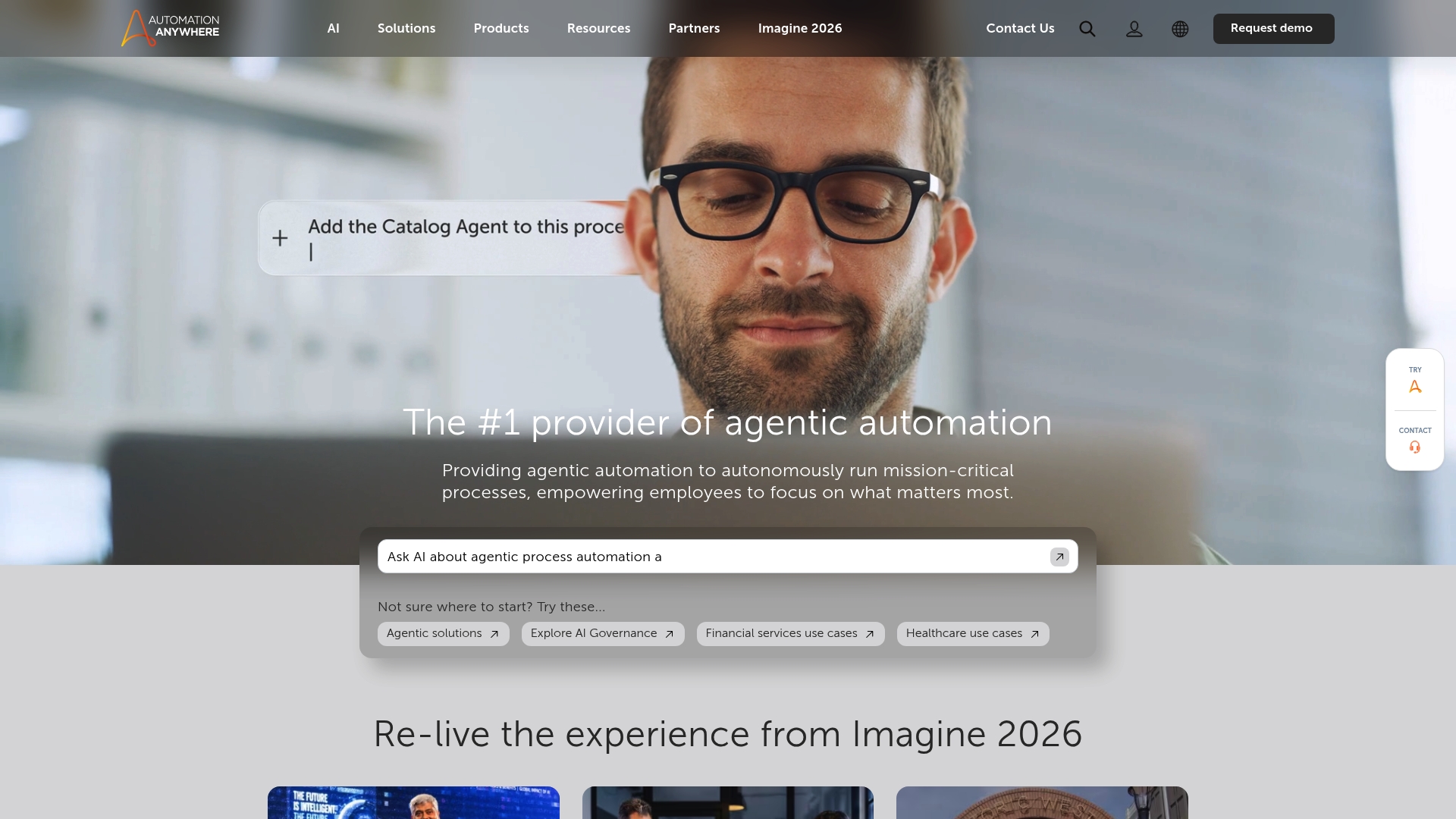
Automation Anywhere's marketing materials state it has been named a Gartner Magic Quadrant Leader for seven consecutive years. The vendor positions itself on agentic automation, combining RPA with pre-built AI agents and governance tools for enterprise usage.
Core Features
- Agentic Process Automation for orchestrating cross-team workflows that involve humans, systems and bots.
- Pre-built AI agents for common industry tasks, plus a visual automation workspace for bot creation and deployment.
- Process Discovery and reporting tools to map work, identify bottlenecks and measure automation outcomes.
- Governance capabilities covering policy controls, audit trails and compliance reporting for regulated sectors.
Key Differentiator
The vendor claims an industry-first Process Reasoning Engine that models process context to sequence tasks across systems and teams. That engine is presented as the mechanism that turns discrete automation pieces into coordinated, decision-aware workflows.
Pros
- Powerful bot lifecycle controls with role-based access and versioning; teams can promote, roll back or test bots without risking production data.
- The performance dashboards provide detailed throughput and failure metrics, which helps operational teams prioritise fixes and track ROI.
- Enterprise grade security and compliance features are built into the platform, which suits regulated sectors such as finance and healthcare.
- Queue management handles high-volume workloads effectively, allowing peak batch runs without manual intervention.
- Industry-specific accelerators reduce initial build time for common processes in banking, insurance and manufacturing.
Cons
- There is a steeper learning curve than for low-code platforms; automation engineers typically need formal training before delivering complex automations.
- Community resources and third-party tutorials are uneven in quality, so pilot projects often rely on vendor services or certified partners.
- Building and configuring large, interdependent automations can be time-consuming and requires discipline around testing and observability.
When It May Not Fit
If your organisation lacks in-house technical resource for automation engineers, this platform will impose hidden costs in training or partner consultancy. Also, if you need a quick, small-scale automation for a single team, a simpler low-code tool will often be faster to adopt.
Who It's For
Large enterprises with high-volume, regulated processes that demand auditability, security and scale. Typical buyers are central automation centres of excellence, IT operations teams, and finance or claims departments in banks and insurers.
Real World Use Case
According to the vendor, a multinational bank used the platform to orchestrate loan processing and reduced handling time by 40%, while consolidating compliance reporting into a single dashboard. That example illustrates how process orchestration plus RPA can cut cycle time and simplify audits.
Pricing
Pricing is not publicly disclosed and appears to follow enterprise tiering with subscription and customisation fees. Expect licence, implementation and optional support or partner services to be quoted per deployment scale and security requirements.
Website: https://automationanywhere.com
UiPath
At a Glance
Low-code drag-and-drop studio combined with built-in process mining and industry templates makes UiPath a toolkit aimed at enterprise rollouts rather than one-off automations. The platform pairs automation design with governance and analytics, though licensing and implementation complexity are commonly reported trade-offs.
Core Features
- Low-code drag-and-drop automation studio for building attended and unattended robots without heavy coding.
- Process mining and analytics tools to discover bottlenecks and measure automation opportunity.
- AI and machine learning integration for document understanding, NLP and decision support.
- Extensive library of connectors and industry templates that accelerate common workflows.
- Security and governance controls for role based access, audit trails and compliance reporting.
Key Differentiator
UiPath brings process discovery, automation authoring and AI connectors into a single product designed for enterprise scale. The platform is tailored to sector use cases such as banking, healthcare and manufacturing, and its governance features aim to support multi-department rollouts while keeping control of robot behaviour.
Pros
- Highly approachable authoring. The drag-and-drop environment lets business analysts prototype automations quickly while handing off complex parts to developers.
- Large ecosystem reduces integration work. Pre-built connectors and templates shorten time to first automation for common enterprise systems.
- Scales to wide deployments. The architecture supports centralised orchestration and thousands of bots in larger estates.
- Strong discovery capabilities. The process mining above helps prioritise where automation delivers measurable returns rather than guessing.
- Industry templates speed delivery for vertical processes such as claims, KYC and inventory reconciliation.
Cons
- Licensing costs can be steep for small and mid-sized organisations, which limits feasibility for tighter IT budgets.
- Complex automations often need specialist developer skills, so internal capability or external consultancy is usually required.
- Large-scale deployment carries infrastructure and operational overhead that some teams underestimate during planning.
When It May Not Fit
If your organisation is small, has limited automation maturity or cannot commit developer capacity, UiPath is likely to feel heavyweight. Teams that need point solutions with predictable per-user pricing will find the enterprise licensing model restrictive. If you lack governance resources, the platform’s scale can become an administrative burden.
Who It's For
Digital transformation teams inside large organisations and enterprise IT groups seeking a single vendor to manage discovery, build and orchestration. Best for firms that plan cross-department automations and can fund licensing plus implementation resources.
Real World Use Case
A global bank used UiPath to automate loan processing and KYC compliance. The implementation combined process mining to map current steps and attended robots for pre-screening, which shortened turnaround and reduced manual errors across multiple offices.
Pricing
UiPath does not publish standard public pricing. Marketing materials point to enterprise tiered licensing and commercial implementation fees, with a free trial option in some cases. Expect licence costs plus ongoing orchestration and maintenance spend for large deployments.
Website: https://uipath.com
Workato Enterprise MCP
At a Glance
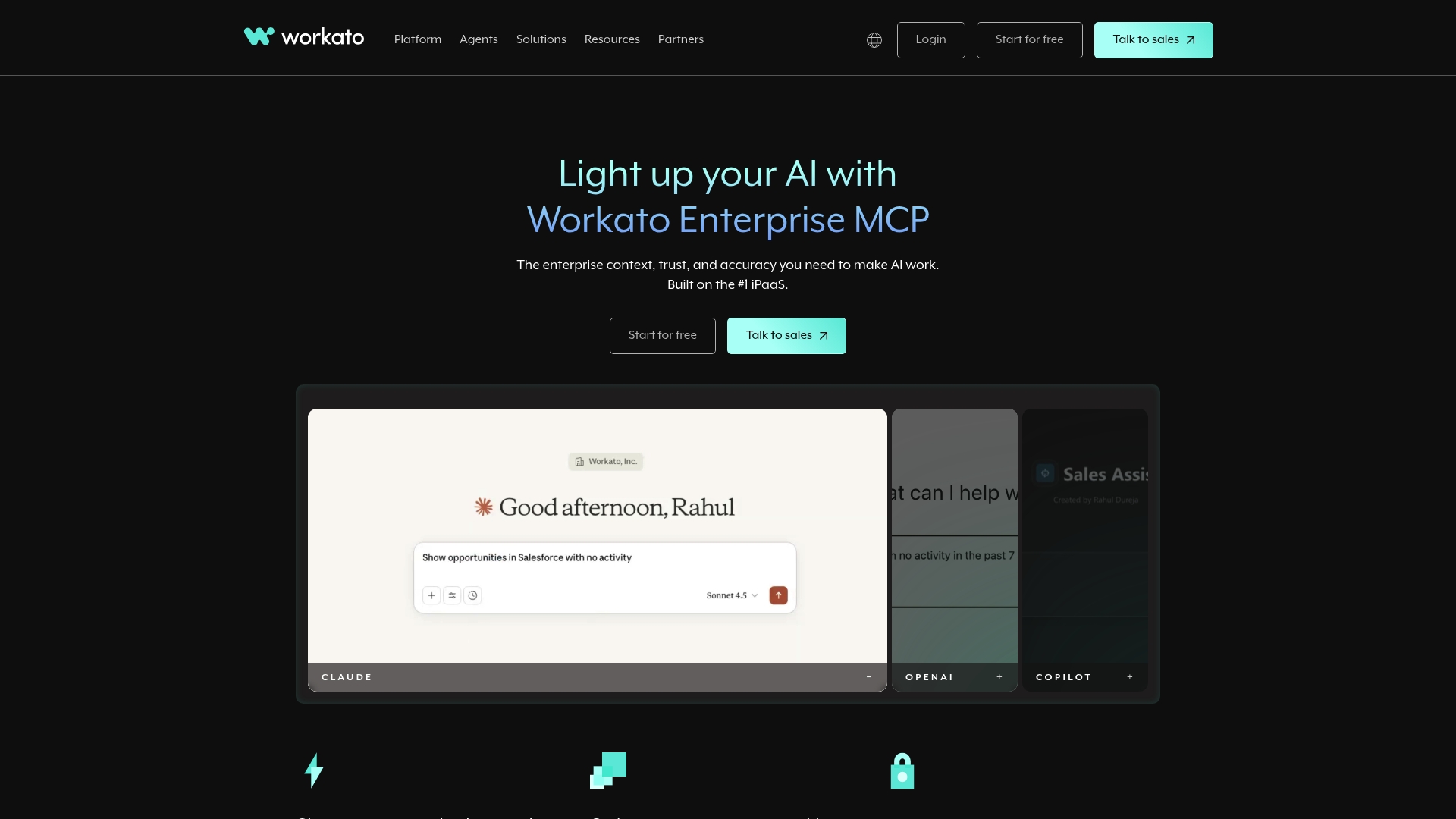
The vendor advertises that the product is built on the #1 iPaaS, combining enterprise integration with AI orchestration, governance and transactional safeguards. That positioning targets mission‑critical automation where rollback, memory and auditability matter to global teams.
Core Features
Provides embedded integrations so vendors can surface connectors inside their own products while retaining governance controls and audit trails. The workflow designer supports stateful orchestration with memory and rollback for transaction‑safe processes.
Security and compliance tooling covers audit logs, role-based controls and operational transparency that IT teams can inspect and report against. Generative AI features accelerate the creation and deployment of automation agents.
Key Differentiator
Built on a market-leading iPaaS with integrated AI and enterprise governance, Workato Enterprise MCP focuses on operational reliability for complex environments. That claim above explains why teams that run regulated processes choose platforms that preserve transactional integrity and centralise control rather than bolt on point solutions.
Pros
-
Intuitive flow builder speeds up design work for engineers and integration specialists, reducing the time from prototype to deployment.
-
Real-time data integration performs well under load, which matters when systems across regions must stay in sync with minimal lag.
-
Documentation is detailed and support is responsive, helping teams troubleshoot complex orchestration or compliance queries.
-
Generative AI features shorten development cycles for common automation patterns, letting teams assemble agent behaviour faster than hand-coding each connector.
-
Security and governance are built into the platform, so audit trails and role controls exist from day one rather than as add-ons.
Cons
-
The platform ships with fewer pre-built connectors than some lighter tools, so expect more initial connector work for niche systems.
-
Complex configurations require advanced technical skills; operations teams will need experienced integration engineers to get the most from the platform.
-
Non-technical users face a steeper learning curve, which increases the effort required for cross-department adoption.
-
Enterprise security and compliance features add to cost; budget holders should plan for higher total cost of ownership than consumer-grade alternatives.
When It May Not Fit
If your organisation is a small team with limited integration needs and minimal compliance requirements, this product is more platform than you need. Similarly, if you lack integration engineers and want a purely low-code tool, the technical workload may outstrip your budget and skills.
Who It's For
IT and operations leaders at large organisations that run enterprise-wide automation and require guarded, auditable AI agents. Best for firms that prioritise transaction safety, traceable change history and governed embedding of integrations into customer-facing products.
Real World Use Case
A multinational deploys trusted AI agents to manage customer support workflows, automating data enrichment across CRM, billing and case systems while keeping rollback paths and audit trails for regional compliance reviews. The platform centralises policy and provides operational visibility to security teams.
Pricing
Pricing is not published. The vendor positions the product as an enterprise-level platform with customised usage and workspace plans; procurement teams should expect bespoke licensing, implementation costs and security service charges during negotiation.
Website: https://workato.com
<scratchpad>Competitor eligibility:
- Excluded products (discontinued / inaccessible / under construction): none
- Usable competitors remaining: Ingenaium, Automation Anywhere, UiPath, Workato Enterprise MCP
Intro pre-write:
- Does gmdautomation.ai clearly outpace every usable competitor on a single dimension? YES
- If YES: dimension where gmdautomation.ai wins — "Zero upfront investment and a unified monthly fee, providing budget predictability."
- First sentence draft: "When considering enterprise AI automation tools, each platform presents unique strengths catered to differing organisational needs and preferences."
Competitor win pre-write:
- Which competitor wins which dimension: Ingenaium wins "Ethical AI deployment and sector-specific frameworks" because "Structured delivery processes with an emphasis on fairness and transparency."
- Does this dimension matter to the primary reader? YES
Best Fit uniqueness check:
- List each bullet scenario in one clause: [Budget-conscious teams preferring included ongoing support] / [Mid-sized enterprises needing industry-aligned strategic tools] / [Organisations prioritising integration and compliance for transactional processes]
- Can any two be swapped without changing meaning? NO
Our Pick pre-write:
- The ONE capability unique to gmdautomation.ai in this set: The ability to access fully managed enterprise AI systems with "no initial capital investment and predictable monthly fees."
- Evidence from the reviews: "The single most tangible distinction is the financing model: GMD Automation builds enterprise-grade AI systems at no upfront cost and delivers them under a fully managed monthly subscription."
- Closing sentence draft: "However, organisations with substantial legacy systems or complex integration needs might prioritise a platform focused on extensive configurability or pre-built solutions for specialised tasks."
- Substitution test: "However, organisations with substantial legacy systems or complex integration needs might prioritise Ingenaium for its structured frameworks or Automation Anywhere for its advanced governance features."
- Does the substituted version still work as a recommendation? YES
- If YES: rewritten closing sentence: "Nonetheless, organisations encountering specific integration challenges or sector demands might find another platform aligning better with their priorities."
Comparative Analysis
When considering enterprise AI automation tools, each platform presents unique strengths catered to specific organisational needs and preferences.
Accessibility and Predictability in Initial Investment
GMD Automation distinctly introduces its "zero upfront investment" model coalesced with a unified monthly subscription, addressing a vital barrier for organisations hesitant towards significant initial spends. In contrast, Ingenaium focuses on structured delivery and oversight, requiring engagement from teams adept in data handling and project management, which may lengthen initial deployment timelines.
Scalability and Sector Orientation
While GMD Automation offers flexibility in scaling with a notice-based capacity adjustment model, Automation Anywhere and UiPath excel in facilitating extensive deployment scenarios, catering to enterprises requiring multi-department orchestration or handling regulated sector processes. Workato Enterprise MCP stands out for organisations needing transaction-safe automation processes augmented with operational visibility and compliance controls.
Best Fit Recommendations
- Opt for GMD Automation if managing budget predictability and avoiding upfront investment aligns strongly with your financial objectives for AI adoption.
- Choose Ingenaium when requiring industry-specific, transparent, and fair AI system implementations with a focus on long-term operational strategies.
- Consider Workato Enterprise MCP for ensuring safe process execution under heavy compliance and regulatory environments.
- Explore UiPath or Automation Anywhere for frameworks supporting expansive, enterprise-level automation rollouts with sector-aligned templates and connectors.
Our Pick
GMD Automation provides a compelling entry point into enterprise AI automation, particularly excelling in budget-friendly deployment models that encompass expected operational support. However, organisations encountering specific integration challenges or sector-specific requirements might discover better alignment or advantages with other available platforms.
Enterprise AI Automation Platforms Comparison
Understanding the options available for enterprise AI automation can help an organisation choose the platform that best aligns with its operational goals, related constraints, and preferred payment models.
| Platform | Core Feature | Key Differentiator | Best For | Pricing | Notable Limitation |
|---|---|---|---|---|---|
| Gmdautomation | AI systems with all-in-one monthly subscription | Zero upfront cost for managed AI deployment | UK SMEs seeking scalable automation | Not disclosed | Tailored pricing complicates direct cost comparison |
| Ingenaium | Pre-built accelerators for document and data tasks | Planned deployments guided by ethical practices | UK enterprises in finance and insurance | Not disclosed | Complex setup increases IT resource demand |
| Automation Anywhere | Agentic Process Automation with AI agents | Industry-first Process Reasoning Engine | Enterprises requiring multi-team workflow orchestration | Not disclosed | Steeper learning curve requires specialised training |
| UiPath | Low-code studio for automation and process mining | Combined discovery and orchestration for enterprise | Large enterprises with high automation maturity | Not disclosed | Licensing fees can be prohibitive for smaller operations |
| Workato Enterprise MCP | Embedded enterprise integrations with AI orchestration | Stateful automation built on leading iPaaS | Large organisations needing transaction reliability | Not disclosed | Fewer pre-built connectors add initial setup effort |
Discover a Flexible Alternative to chilliapple.co.uk with Gmdautomation
Choosing the right AI automation platform can feel daunting when faced with multiple options like chilliapple.co.uk alternatives. Gmdautomation solves crucial challenges such as avoiding upfront capital costs and lengthy procurement delays by offering enterprise-grade AI systems on a predictable monthly subscription. This means UK businesses can access scalable, secure automation with continuous support and no hidden fees.
Why settle for complexity when you can have simplicity
- Zero upfront investment
- Rapid deployment in as little as one week
- All-in-one hosting, monitoring and optimisation
Explore Gmdautomation’s solutions and experience hands-on demos designed to build confidence. Book a personalised consultation to see how quickly your organisation can start automating customer interactions and internal workflows with real, measurable ROI.
Frequently Asked Questions
What features make Gmdautomation suitable for enterprise AI automation?
Gmdautomation offers an all-in-one monthly subscription that includes deployment, hosting, monitoring, and continuous optimisation. This feature simplifies operational management and removes the need for multiple vendor invoices, making it suitable for organisations looking for efficient AI solutions. Consider starting with Gmdautomation for a streamlined approach to your AI automation needs.
How does Gmdautomation compare to Automation Anywhere in terms of ease of use?
Automation Anywhere has been praised for its powerful bot lifecycle controls and is particularly suitable for regulated sectors like finance and healthcare. In contrast, Gmdautomation's managed service model allows teams to initiate automation projects without requiring in-house machine learning expertise. Gmdautomation is ideal for smaller teams looking for quick implementation without heavy technical demands.
What’s the deployment time for Gmdautomation solutions?
Gmdautomation claims an average deployment time of just one week, enabling organisations to quickly realise benefits from their automation efforts. This rapid timeframe allows companies to start seeing returns on investment sooner than with many competitors. Teams interested in swift deployment should consider Gmdautomation as a fit.
Can I expect measurable ROI with Gmdautomation?
Gmdautomation cites a measurable ROI around 5x from its solutions, demonstrating the financial impact of its AI systems. This metric provides potential users a compelling reason to engage with Gmdautomation for automation projects. Look to Gmdautomation for a strong return on investment in your AI automation efforts.
What is the subscription pricing model of Gmdautomation?
Gmdautomation operates on a zero upfront investment model, allowing systems to run on a subscription basis that includes all implementation and ongoing support. This pricing strategy helps organisations manage budgets more predictably and reduces procurement friction. Consider Gmdautomation for an easier financial commitment to enterprise AI automation.